By Dr Joseph Wilson, DMD
People with braces should avoid hard, sticky, crunchy, and chewy foods because they can damage brackets, bend wires, or delay treatment. Softer foods and careful eating habits help keep orthodontic treatment on track.
Knowing the main foods to avoid with braces helps protect your treatment and keeps your appointments on track. A broken bracket or wire may seem small, but it can slow tooth movement, cause discomfort, and lead to extra visits.
At OrthoDental Inc. in Gallup, our team helps patients understand how to care for braces from the first day of treatment. The goal is not to make eating stressful. It is to help you make smart choices so your braces can do their job.
Why Food Choices Matter With Braces
Braces work by applying steady pressure to your teeth. Brackets, wires, and small attachments all work together to guide tooth movement over time. When something breaks or bends, that movement can be interrupted.
Hard foods can snap brackets off the teeth. Sticky foods can pull at wires and elastic ties. Crunchy snacks can wedge into hard-to-clean areas. Sugary foods can also increase plaque buildup around brackets, which may raise the risk of white spots, cavities, or gum irritation.
If you are starting braces in Gallup, NM, learning what to avoid early can make treatment smoother and more comfortable.
Hard Foods to Avoid With Braces
Hard foods are risky because they can put too much pressure on brackets and wires. Even one strong bite can damage your braces.
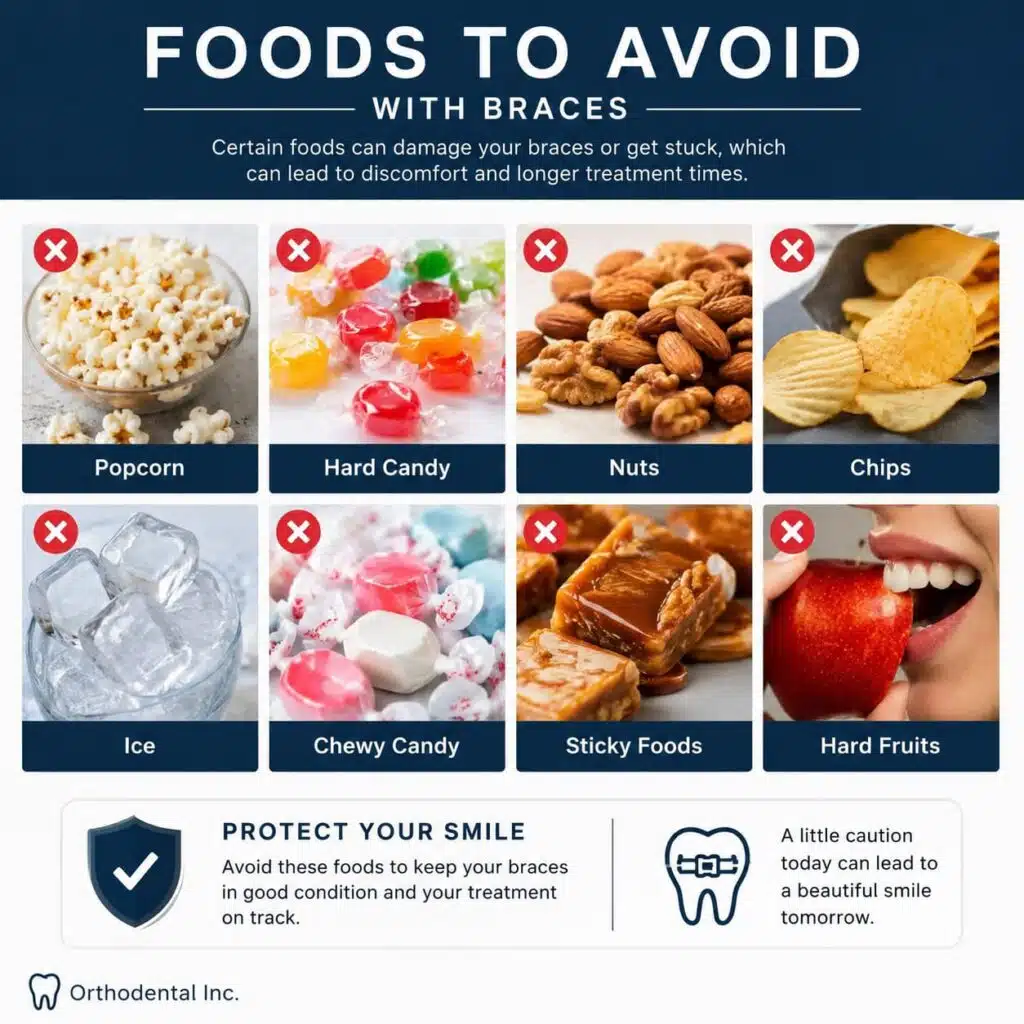
Common hard foods to avoid include:
- Hard candy
- Ice
- Popcorn kernels
- Whole nuts
- Hard pretzels
- Crunchy taco shells
- Corn chips
- Raw carrots
- Hard crusty bread
- Pizza crust if very firm
Some healthy hard foods do not need to disappear completely. You can often modify them. For example, apples can be cut into thin slices, carrots can be cooked or cut small, and crusty bread can be softened or avoided when too tough.
The rule is simple: do not bite directly into anything hard enough to stress your brackets.
Sticky Foods to Avoid With Braces
Sticky foods are another major problem during orthodontic treatment. They can cling to brackets, pull on wires, and get stuck in places that are difficult to clean.
Sticky foods to avoid include:
- Caramel
- Taffy
- Chewy candy
- Gummies
- Licorice
- Sticky granola bars
- Chewing gum unless your orthodontist says otherwise
These foods can be especially frustrating because the damage may not happen right away. A sticky candy can loosen a bracket or bend a wire without you noticing until later.
Patients wearing braces should be cautious with anything that stretches, sticks, or takes extra effort to pull away from the teeth.
Crunchy Snacks That Can Cause Problems
Crunchy snacks may seem harmless, but many of them break into sharp pieces or require heavy chewing. That can make them risky for braces.
Examples include:
- Popcorn
- Chips
- Hard crackers
- Crunchy cereal
- Corn nuts
- Hard taco shells
- Very toasted bread
Popcorn is one of the biggest offenders. Kernels and hulls can get stuck around the gums and brackets, and unpopped kernels can break appliances. The American Association of Orthodontists also advises patients with braces to be careful with hard, sticky, and chewy foods that can damage orthodontic appliances.
If you want a snack, choose softer options that do not put direct pressure on brackets.
Foods You Can Eat With Braces
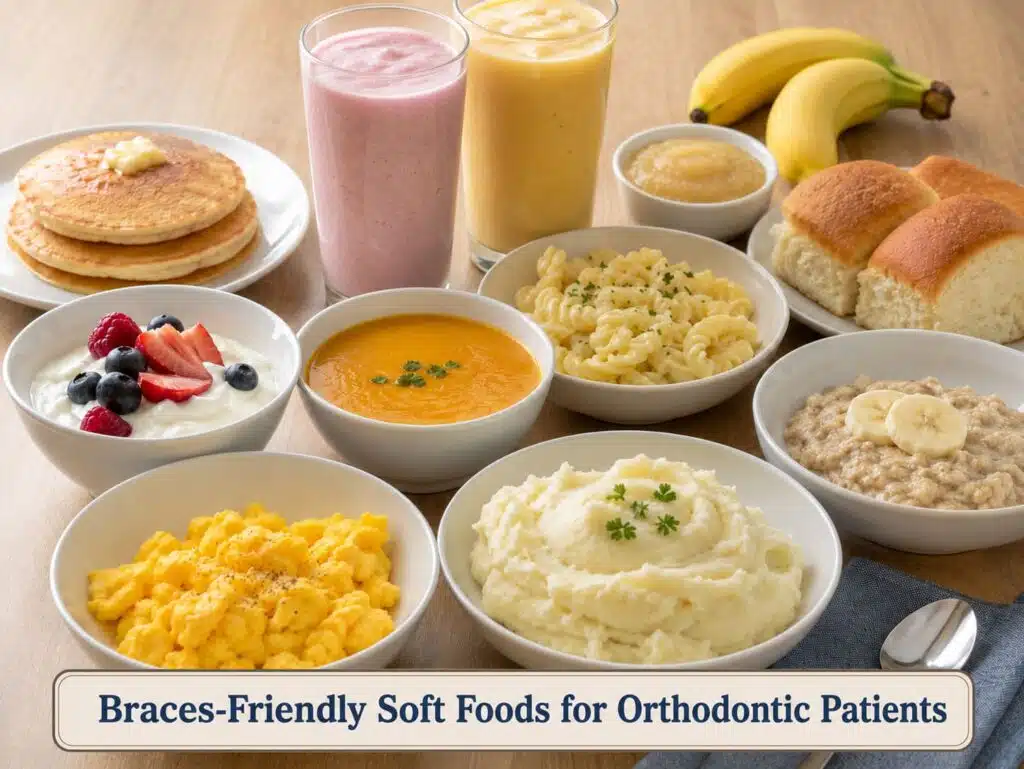
The good news is that there are plenty of braces-friendly foods. During the first few days after braces are placed or adjusted, softer foods are usually more comfortable.
Good options include:
- Yogurt
- Smoothies
- Scrambled eggs
- Pasta
- Soft rice
- Soup
- Mashed potatoes
- Oatmeal
- Soft cooked vegetables
- Fish
- Soft chicken
- Pancakes
- Bananas
- Applesauce
You do not have to eat bland food throughout treatment. You just need foods that are easier to chew and less likely to damage brackets or wires.
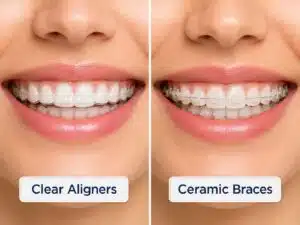
If you are comparing treatment choices, our team can also explain whether Invisalign treatment in Gallup may be an option. Clear aligners are removed for meals, but they require consistent wear and may not be right for every case.
What About Sugary Foods and Drinks?
Sugar does not usually break braces, but it can create another problem: plaque. Brackets and wires create more places for food and bacteria to collect. If sugary foods and drinks are frequent, plaque can build up around the brackets.
This may lead to cavities, gum inflammation, or white marks on the teeth after braces are removed.
Try to limit:
- Soda
- Sports drinks
- Sweet tea
- Candy
- Cookies
- Cake
- Sugary cereals
- Frequent snacking
If you do have something sweet, rinse with water and brush carefully when you can. The goal is not perfection. It is consistency.
The American Dental Association explains that patients with braces need extra attention to brushing and cleaning around orthodontic appliances to protect the teeth during treatment.
How to Eat Safely With Braces
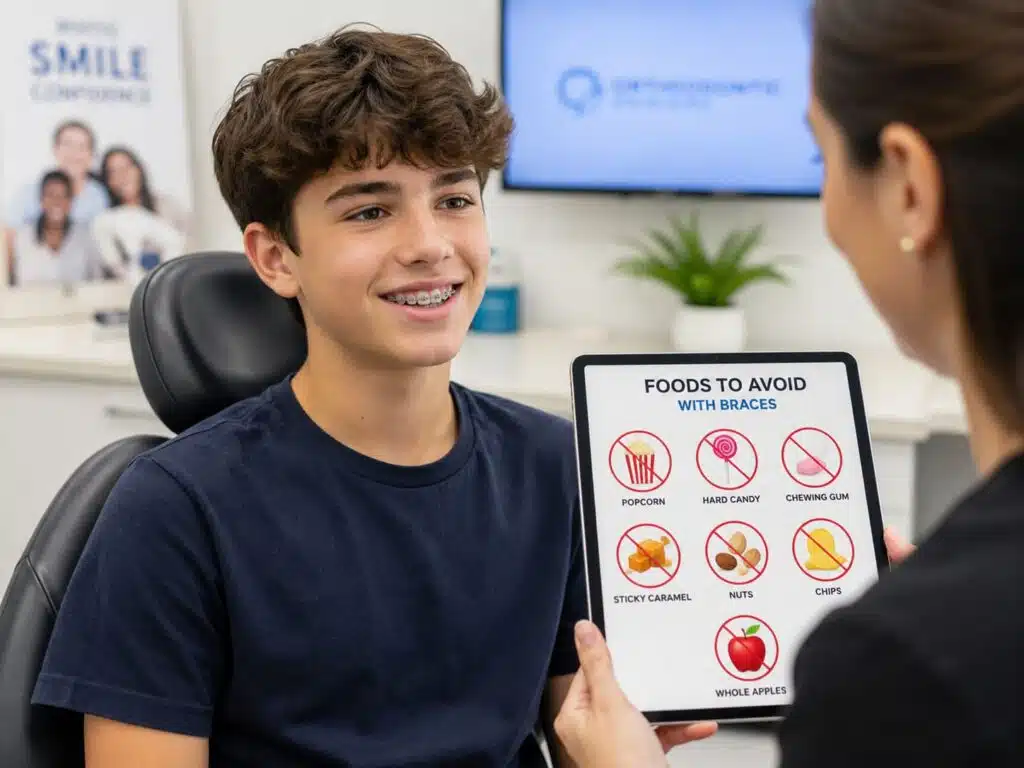
Food choice matters, but so does how you eat. Many braces problems happen because patients bite directly into something instead of cutting it into smaller pieces.
Try these habits:
- Cut food into small bites
- Chew slowly
- Avoid biting into whole apples, corn on the cob, or tough sandwiches
- Use back teeth carefully for chewing
- Do not chew on pens, fingernails, or ice
- Brush after meals when possible
- Check your braces after eating
If a bracket feels loose or a wire is poking, call the office. Do not wait for the next appointment if something feels wrong.
What Happens If You Eat the Wrong Food?
One mistake does not ruin treatment, but repeated damage can slow progress. If a bracket breaks or a wire bends, the teeth may stop moving the way they should. In some cases, the wrong force can also cause discomfort or irritation.
If something breaks, contact OrthoDental Inc. for guidance. Our team can let you know whether you need to come in or whether the issue can wait until your next scheduled visit.
Avoid trying to fix braces yourself. Cutting wires, pulling brackets, or forcing pieces back into place can make the problem worse.
The Bottom Line
Learning the foods to avoid with braces helps protect your appliances, your comfort, and your final result. Hard, sticky, crunchy, and overly chewy foods are the biggest concerns. Softer foods, smaller bites, and careful cleaning can make treatment much easier.
Braces are a temporary commitment, but the result can last for years with the right care. A few food changes now can help you avoid broken brackets, extra visits, and preventable delays.
Protect Your Braces With the Right Care
If you or your child is starting braces, OrthoDental Inc. can help you understand what to expect, how to care for your appliances, and what foods are safest during treatment. Schedule a consultation to discuss braces, clear aligners, and other orthodontic options.
Frequently Asked Questions
What foods should I avoid with braces?
The main foods to avoid with braces are hard, sticky, crunchy, and chewy foods. These include hard candy, gum, caramel, popcorn, nuts, chips, and tough bread.
Can I eat pizza with braces?
Yes, but avoid very hard crust. Softer pizza is usually easier to eat. Cut it into smaller pieces instead of biting into a tough crust with your front teeth.
Can I eat apples with braces?
Yes, but do not bite into a whole apple. Cut it into thin slices or small pieces to reduce pressure on your brackets.
What snacks are safe with braces?
Soft snacks such as yogurt, smoothies, applesauce, soft fruit, cheese, pudding, and soft baked goods are usually easier to eat with braces.
What happens if I break a bracket?
Call your orthodontic office for guidance. A broken bracket may need to be repaired so treatment can stay on track.
How long do I need to avoid certain foods?
You should avoid risky foods for as long as your braces are on. Once braces are removed, your orthodontist will explain how to care for your retainers and maintain your results.