By Dr Joseph Wilson, DMD
Choosing between clear aligners and ceramic braces can feel confusing because both options are designed to straighten teeth with a more discreet look than traditional metal braces. They can both improve alignment, spacing, crowding, and certain bite concerns, but they work differently and fit different lifestyles.
At OrthoDental Inc. in Gallup, our team helps patients compare treatment options based on more than appearance alone. The right choice depends on your bite, tooth movement needs, age, habits, budget, and how much responsibility you want during treatment.
This guide breaks down clear aligners vs ceramic braces in plain language so you can better understand what each option offers before your orthodontic consultation.
What Are Clear Aligners?
Clear aligners are custom-made trays that fit over your teeth and move them gradually. Instead of brackets and wires, you wear a series of aligners, with each set designed to guide your teeth into the next stage of treatment.
Many patients like aligners because they are removable. You take them out to eat, drink anything besides water, brush, and floss. This makes them convenient for adults, teens, and patients who want fewer food restrictions during treatment.
At OrthoDental Inc., Invisalign treatment in Gallup may be recommended for patients who want a clear, removable orthodontic option and are good candidates for aligner wear.
What Are Ceramic Braces?
Ceramic braces work much like traditional braces, but the brackets are made from clear or tooth-colored ceramic material. This makes them less noticeable than metal braces while still giving the orthodontist strong control over tooth movement.
Ceramic braces are fixed to the teeth, so they work all day. You do not remove them for meals or cleaning. That can be helpful for patients who want a more discreet look but do not want the responsibility of remembering to wear aligners.
Patients who need more detailed correction may benefit from braces in Gallup, NM, especially when bite control, rotations, or more complex tooth movement are part of the plan.
Appearance: Which Looks More Discreet?
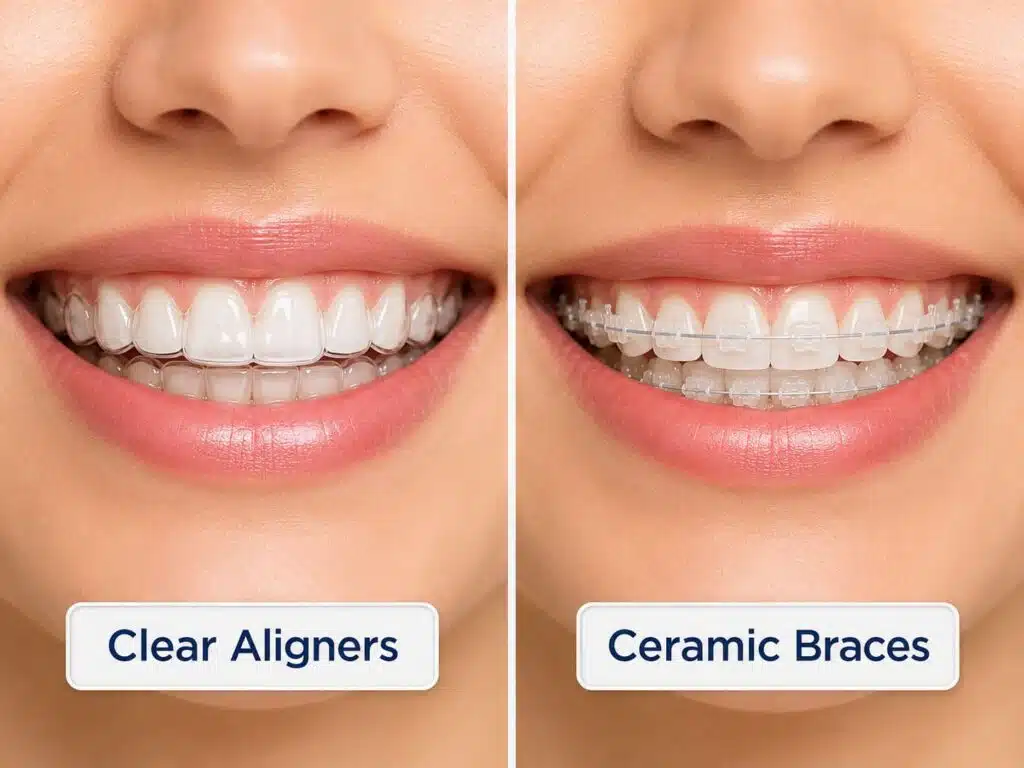
Appearance is one of the biggest reasons patients compare these two options. Clear aligners are usually the least visible because they are transparent trays that fit closely over the teeth. They may still be noticeable up close, especially if attachments are needed, but many people find them subtle.
Ceramic braces are also less noticeable than metal braces. The brackets blend with the tooth color, although the wire may still be visible. They are a good option for patients who want fixed braces with a softer appearance.
If appearance is your top priority, aligners may have the edge. If you want a discreet option but need fixed treatment, ceramic braces may be the better choice.
Comfort: What Feels Better?
Both options move teeth, so both can cause pressure or mild soreness. This usually happens when you start treatment, switch to a new aligner, or have braces adjusted.
Clear aligners are smooth and removable, so they do not have brackets that can rub the cheeks. However, they can feel tight when you change trays.
Ceramic braces may cause more rubbing at first because of the brackets and wires. Orthodontic wax can help with irritation while your mouth adjusts. Cleveland Clinic notes that clear braces use components similar to metal braces, while clear aligners are removable trays that fit over the teeth.
Comfort is important, but treatment effectiveness and long-term results should also be considered. The best treatment is the one that can move your teeth safely and predictably.
Eating and Daily Routine: Aligners Offer Fewer Food Restrictions
Clear aligners make eating simpler because you remove them before meals. You do not have to avoid popcorn, crunchy chips, sticky candy, or hard foods because of brackets and wires. You still need to brush before putting aligners back in, which can take planning when you are away from home.
Ceramic braces stay on your teeth, so food restrictions are more important. Hard, sticky, or crunchy foods can damage brackets or wires. You also need to clean carefully around the brackets to prevent plaque buildup.
If you want the most freedom with food, clear aligners are usually easier. If you prefer not to track wear time and tray changes, ceramic braces may feel simpler.
Cleaning and Oral Hygiene: Aligners Are Easier to Brush Around, Braces Need More Detail
Clear aligners are removed before brushing and flossing, so daily hygiene can feel more normal. You also need to clean the trays properly and avoid putting them back over dirty teeth.
Ceramic braces require more attention. Plaque can collect around brackets, wires, and the gumline. Patients need to brush carefully and may benefit from floss threaders, interdental brushes, or a water flosser.
Adults now have several orthodontic options, including clear aligners and cosmetic braces, but long-term success still depends on choosing an option that fits the patient’s needs and habits.
Treatment Control: Ceramic Braces May Be Better for Complex Movement
This is where the choice becomes more clinical. Clear aligners can work very well for many mild to moderate alignment issues. They may help with spacing, crowding, and certain bite concerns when the case is appropriate.
Ceramic braces may be better for more complex orthodontic problems. Because they are fixed to the teeth, they can give the orthodontist more control in certain cases. This may matter for severe rotations, more involved bite correction, or movements that are harder for aligners to complete predictably.
When comparing clear aligners vs ceramic braces, it is important to ask which option can actually create the healthiest result, not just which one looks better.
Cost: Which Option Is More Affordable?
Cost varies from patient to patient. Clear aligners and ceramic braces may have different fees depending on the case, materials, treatment length, and follow-up needs.
Ceramic braces may cost more than metal braces because of the bracket material. Clear aligners may also vary in cost depending on the number of trays, refinements, and complexity of treatment.
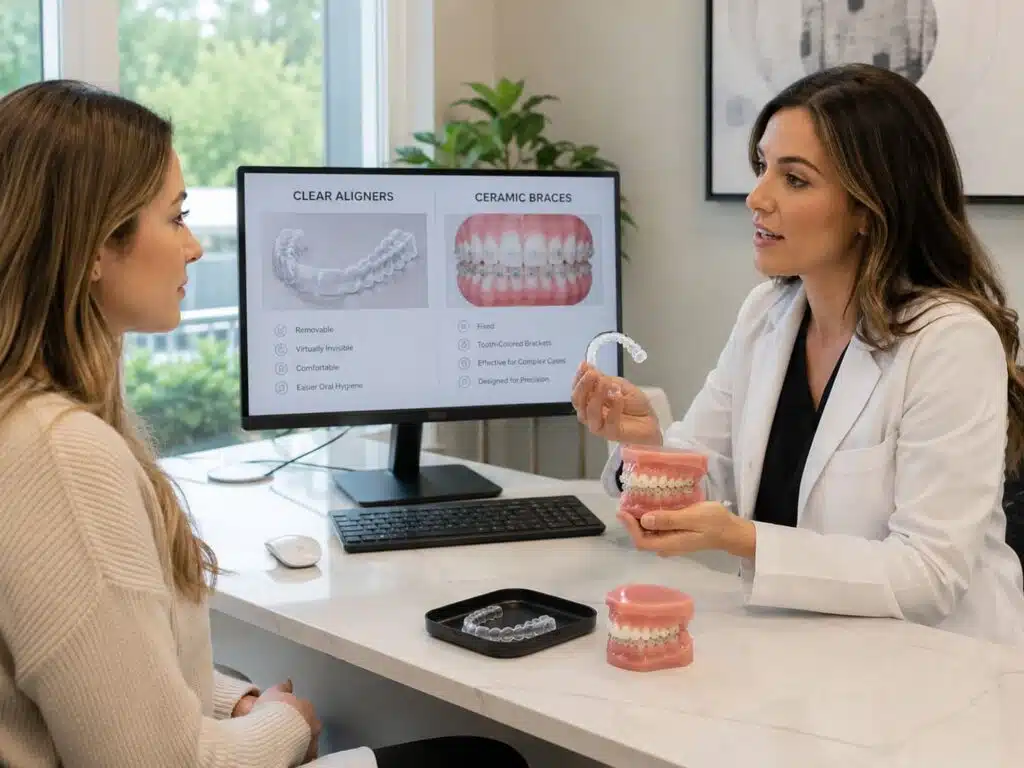
If cost is a concern, the best step is a consultation. OrthoDental Inc. can review treatment options, estimated fees, and payment choices before treatment begins. You can also read more about braces cost in Gallup if you want a broader idea of what may affect orthodontic pricing.
Who May Prefer Clear Aligners?
Clear aligners may be a good fit if you:
- Want the most discreet treatment option
- Prefer removable trays
- Want fewer food restrictions
- Can wear aligners consistently
- Brush and floss regularly
- Have a case that aligners can treat predictably
The biggest challenge is compliance. Aligners only work when you wear them. If you forget them often, leave them out too long, or lose trays, treatment can fall behind.
Who May Prefer Ceramic Braces?
Ceramic braces may be a good fit if you:
- Want braces but prefer a less noticeable look
- Need more controlled tooth movement
- Do not want to manage aligner wear time
- Have a more complex bite or alignment issue
- Are willing to avoid certain foods
- Can clean carefully around brackets
Ceramic braces can be a strong middle ground for patients who want a more aesthetic option but still need the structure of fixed braces.
Clear Aligners vs Ceramic Braces: Which Is Better?
There is no single winner for everyone. Clear aligners may be better if your case is a good fit and you want flexibility. Ceramic braces may be better if you need more control but still want treatment that looks less noticeable than metal braces.
At OrthoDental Inc., Dr. Joseph Wilson, DMD, MSD helps patients compare orthodontic options based on tooth movement, bite fit, oral hygiene, comfort, and long-term stability. The goal is not simply to choose the most popular option. It is to choose the one that gives your smile the best chance of a healthy, lasting result.
Compare Your Options With OrthoDental Inc.
If you are deciding between aligners and ceramic braces, a consultation can help you move from guessing to knowing. Our team can evaluate your teeth, bite, goals, and lifestyle, then explain which treatment option makes the most sense for your smile.
Visit OrthoDental Inc. to learn more about our Gallup office, or schedule a consultation to discuss clear aligners, ceramic braces, and other orthodontic options.
Frequently Asked Questions
Are clear aligners better than ceramic braces?
Clear aligners are better for some patients, especially those who want removable, discreet treatment and can wear trays consistently. Ceramic braces may be better for patients who need more controlled tooth movement.
Do ceramic braces stain?
The ceramic brackets themselves resist staining, but clear or light-colored elastic ties may discolor over time. Good brushing habits and avoiding stain-heavy foods and drinks can help.
Are clear aligners faster than ceramic braces?
Not always. Treatment time depends on the complexity of the case, how much movement is needed, and how well the patient follows instructions. Some cases are faster with aligners, while others are more efficient with braces.
Are ceramic braces painful?
Ceramic braces can cause pressure or soreness after placement and adjustments, similar to other orthodontic treatments. This usually improves as your mouth adjusts.
Can adults choose either option?
Yes. Many adults are candidates for clear aligners or ceramic braces. The right option depends on the bite, tooth movement needs, oral health, lifestyle, and goals.
How do I know which option is right for me?
The best way to know is through an orthodontic consultation. Your provider can evaluate your teeth and bite, then explain whether clear aligners, ceramic braces, metal braces, or another option is most appropriate.